About
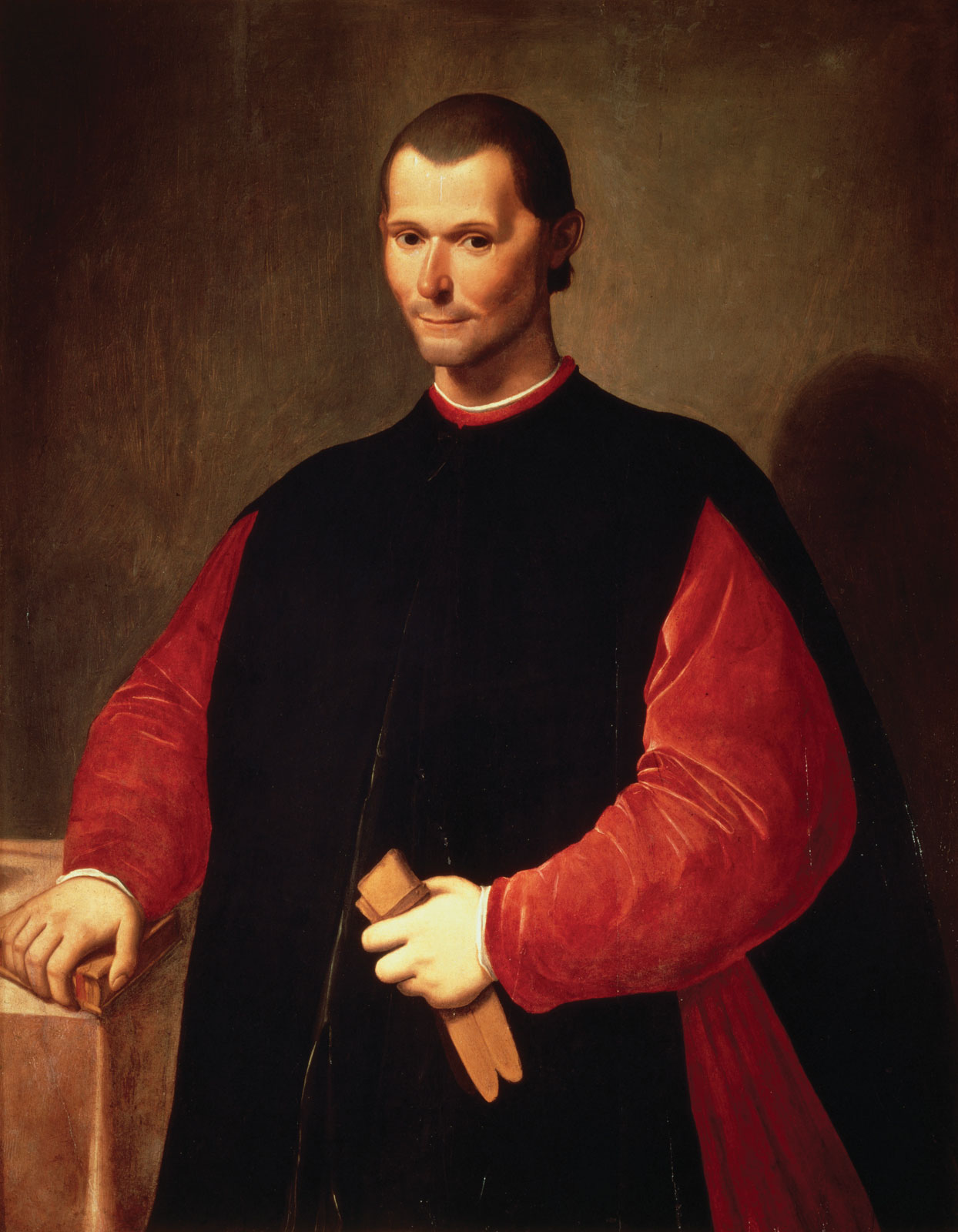
Niccolò Machiavelli was an Italian diplomat, author, philosopher, and historian who lived during the Renaissance. He is best known for his political treatise The Prince (Il Principe), written around 1513 but published posthumously in 1532. He has often been called the father of modern political philosophy and political science.
Core Teachings of The Prince
Machiavelli argued that a ruler should focus on the "effectual truth" of how things are, rather than the "imaginary" view of how things ought to be. Effectiveness in maintaining the state is the ultimate metric of success.
He famously asked whether it is better to be loved or feared. His conclusion was that while one would like to be both, it is much safer to be feared than loved, if one of the two must be lacking, because love is held by a chain of obligation which men break whenever it serves their advantage, but fear is maintained by a dread of punishment which never fails.
A prince must know how to act as both a beast and a man. Specifically, he must imitate the fox (to recognize traps) and the lion (to frighten wolves). Relying on only one of these is insufficient for long-term survival.
Machiavelli redefined virtù not as moral goodness, but as the strength, skill, and wisdom to adapt to Fortuna (luck or fate). A successful ruler must be able to "strike" Fortuna when she is favorable and prepare for her when she is not.
Historical Machiavellianism in Action
Machiavelli's contemporary and primary inspiration for The Prince. Borgia famously used Remirro de Orco to pacify the Romagna through brutal methods. Once pacified, Borgia had de Orco executed and his body displayed in the town square to deflect the people's hatred away from himself and satisfy their desire for justice.
The "Iron Chancellor" of Germany utilized Realpolitik to unify the German states. He frequently manipulated foreign powers into declaring war on Prussia (such as the Franco-Prussian War) to consolidate internal German support, prioritizing state power over abstract diplomatic ideals.
As chief minister to Louis XIII, he pioneered the concept of Raison d'État (Reason of State). Despite being a Catholic Cardinal, he allied France with Protestant powers during the Thirty Years' War to weaken the Habsburgs, demonstrating that the survival and interests of the state supersede religious or moral affiliations.